Read the Fine Print on the Podium: A Field Guide to Sponsor Content Hiding in Plain Sight
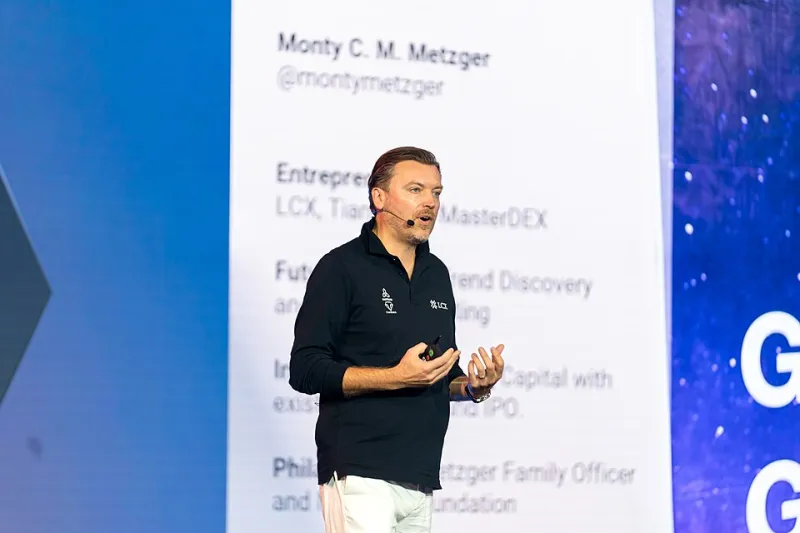
Photo: Montymetzger, CC0, via Wikimedia Commons
Let us say the uncomfortable part out loud: a meaningful slice of what fills the schedule at many US science conferences is not science. It is marketing, dressed in the grammar of a scientific program — session codes, speaker bios, learning objectives — and funded by the same companies whose products the talks will celebrate.
This is not a new phenomenon. The "sponsored symposium" has been a fixture of American medical meetings for decades. What has changed is the sophistication of the camouflage and the migration of the format into disciplines that never had to think about it before. A materials science meeting in Boston last year ran a "technical showcase" on next-generation instrumentation that turned out, on close reading of the program addendum, to be underwritten by the instrument manufacturer whose equipment featured in every slide.
Researchers deserve better than to be ambushed by an ad in a session room. Here is how to protect yourself — and what conferences should be doing.
The Red Flags, Ranked by Subtlety
The logo that keeps following you. A single sponsor logo on the program is commerce; a sponsor logo in the session title, the abstract, and every slide header is a product demo. Count the repetitions.
**Speakers whose affiliation is a job title."Medical Science Liaison" and "Scientific Affairs Director" are marketing-adjacent roles. That does not automatically disqualify a speaker, but when an entire session's lineup works for one company, you are attending a sales presentation with better catering.
Learning objectives that read like a feature list. Genuine educational sessions describe concepts you will understand. Sponsored ones describe capabilities you will want. If the stated objective is that attendees will "appreciate the advantages of" a named product, you have your answer.
The disclosure in the smallest font on the page. The phrase "This session is supported by an unrestricted educational grant" has become the industry's favorite fig leaf. Unrestricted grants are rarely unrestricted in practice, and a disclosure printed at eight points on page 47 of the program is not disclosure so much as deniability.
Q&A sessions where questions are screened. Nothing announces a promotional session faster than a moderator who decides which audience questions are permitted to exist.
What Conferences Owe Their Attendees
The standard should not be complicated. ScieConf would propose three rules that any program committee could adopt tomorrow.
First, mandatory, prominent labeling — not a footnote but a banner on the session listing itself, using plain language: "Promotional Session" rather than "Supported Session."
Second, separation of scheduling. Sponsored content belongs in designated blocks, not interleaved with contributed talks where a hurried attendee might wander in by mistake. If a company's session is genuinely valuable, it will survive being scheduled against the poster reception.
Third, publication of the sponsorship-to-program ratio. Attendees deserve to know what fraction of a meeting's content is paid for before they register. Societies that publish this number will find, perhaps to their surprise, that transparency is a selling point rather than a liability.
A Practical Stance for Presenters
If you are invited to speak in one of these sessions, the calculus is genuinely difficult. The honoraria are real, the audience is large, and declining may cost a junior researcher a valuable line on a CV. But understand what you are signing: your name, your affiliation, and your scientific credibility attached to content someone else paid to place.
The most defensible position is conditional participation — insist on disclosure of the funding source in your own introduction, retain editorial control over your slides, and decline any request to submit your talk for company review. Speakers who hold these lines are doing more to raise the floor of conference integrity than any policy document.
Science conferences exist to let researchers evaluate evidence. Content that exists to make you a customer is not inherently evil, but it is not evidence either — and it should never require a magnifying glass to tell the difference.