Mic Check: How a Single Floor Question Can Make or Break Your Conference Reputation
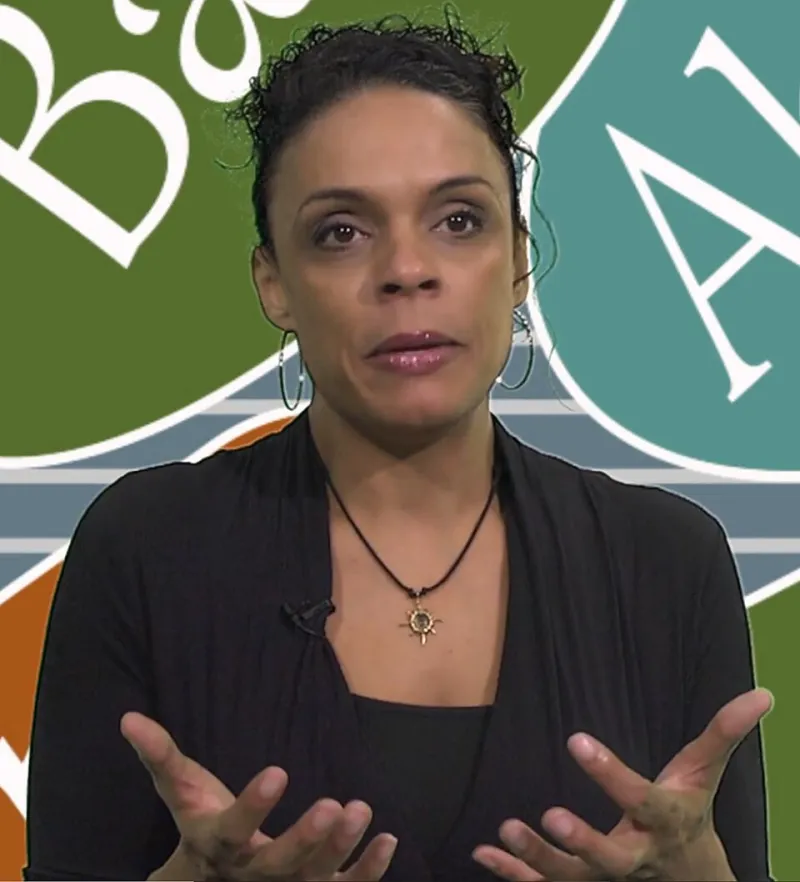
Photo: Provided by National Science Foundation, Public domain, via Wikimedia Commons
Every conference talk ends the same way: the speaker clicks to a acknowledgments slide, thanks the audience, and the session moderator scans the room for raised hands. What happens in the next ten minutes is, in the estimation of many senior scientists, more consequential for an early-career researcher than the talk that preceded it.
A question from the floor is a public performance. It is judged not only on substance but on tone, framing, and — perhaps most unforgivingly — on what the room perceives as your motive. Yet almost nobody trains for it. Graduate programs teach statistical methods and grant writing; they rarely teach the difference between a question that earns you a collaborator and one that earns you a quiet nod of dismissal from the person who will review your next abstract.
The Taxonomy of Floor Questions
Ask a handful of session chairs at large American meetings — the sorts of gatherings that fill convention centers in Chicago, San Diego, or Washington — and a pattern emerges. Floor questions tend to fall into recognizable categories, and the room categorizes them faster than you can finish your sentence.
There is the genuine question, which seeks information the speaker may actually possess. There is the clarification, short and mechanical, often the safest opening move for a nervous first-timer. There is the credentialing question, which exists mainly to display the questioner's own expertise — "This is interesting; in our work on a related system, we found..." — and which senior attendees can spot within a clause or two. And then there is the ambush: a question engineered less to elicit an answer than to expose a flaw.
None of these categories is inherently fatal. But each carries a cost-benefit profile, and the arithmetic changes depending on who you are in the room.
Why the Ambush Rarely Pays
The most common networking landmine, particularly at large US meetings, is what one veteran session chair describes as the "gotcha dressed as rigor." The questioner challenges a methodological choice, the speaker concedes the point or parries it, and the questioner doubles down. From the floor, this can feel like intellectual heroism. From the stage — and from the audience watching the exchange — it often reads as something else.
The reason is structural. The speaker has had months with the data; you have had twelve minutes. If your challenge lands, the room remembers a sharp exchange. If it misses, the room remembers that you misread the talk in public. The asymmetry is unforgiving, and the audience is rarely in a position to appreciate nuance in either direction.
There is also the reputational shadow cast forward. Program committees talk. PIs in adjacent fields compare notes over conference dinners. A researcher known for grandstanding at Q&As may find that reputation precedes them in ways they never see — a reviewer assignment, a closed door at a booth, a name absent from an invitation list.
What Senior Researchers Actually Hear
Interpretation of a question is rarely about the question itself. A mid-career investigator at a national society meeting put it plainly: "I'm listening for whether the person is curious or whether they're performing. Curiosity is legible, and it's rare enough to be memorable."
This is why phrasing matters more than most questioners realize. Consider the difference between:
- "How did you rule out confounding by batch effects?" — direct, checkable, and fine.
- "I'm surprised you didn't address batch effects." — a challenge wearing a question's clothing.
- "Could you say more about how batch effects were handled? I ask because our platform showed similar variability." — an invitation, plus context, plus a handshake.
The third formulation does three things at once: it gives the speaker a face-saving path, it signals your own competence without claiming the stage, and it opens a conversational door that can be walked through later at the poster session or the coffee line. That follow-up corridor conversation — as we have argued elsewhere on ScieConf — is where a great deal of actual scientific collaboration begins.
The Introvert's Playbook
For researchers who freeze when the microphone comes around, the standard advice — "just ask a question!" — is not advice; it is a command. A more workable approach treats the Q&A as a skill with discrete, practicable components.
Prepare one question per session in advance. Read the abstracts before the session, identify the one talk where you have a legitimate point of curiosity, and draft a single-sentence version of it. Rehearsed questions sound rehearsed only when they are long.
Use the clarification opener. "Could you clarify how you defined the exposure window?" is nearly impossible to get wrong, requires no confrontation, and gets your voice into the room. First questions are disproportionately remembered; make the first one easy on yourself.
Skip the preamble. The phrase "I have more of a comment than a question" is, in the folk taxonomy of American meetings, a warning siren. The audience braces. Whatever follows had better be brief and genuinely useful, or it will be remembered as the moment someone took the microphone to give a talk of their own.
Defer to the hallway when in doubt. A sharp methodological concern raised privately, with slides in view, is a gift to the speaker. The same concern raised publicly is a duel. Choosing the hallway is not timidity; it is strategy, and speakers know the difference.
A Short Field Guide
Condensed from the accumulated folk wisdom of session chairs and the observed behavior of researchers who seem to collect collaborators at every meeting:
- Lead with something the talk earned. Acknowledgment before challenge lowers the temperature of the entire exchange.
- One question per turn. Two questions disguised as one is the second most common floor offense.
- Never open with "This may be a dumb question." It invites the room to evaluate the premise.
- If your question requires more than thirty seconds of setup, it is a comment, and the hallway is the better venue.
- Follow up in person. The question's real value is often the conversation it licenses afterward, not the answer itself.
The Longer Game
A conference Q&A is a low-stakes stage with high-stakes witnesses. The researchers who thrive at US meetings over a career are rarely the sharpest debaters in the room; they are the ones the room associates with genuine engagement — people whose questions made talks better, whose follow-ups turned into drafts, whose names surface years later on grant review panels with a flicker of recognition.
The microphone comes around to everyone eventually. What you do with your two minutes is, in a very real sense, part of your publication record — one that never appears on a CV but is consulted constantly.