Flying Solo at the Convention Center: A Survival Guide for Grad Students With No Lab Behind Them
Every February, a few thousand people file into the convention centers of Boston, San Diego, and Chicago carrying the same quiet anxiety. They are graduate students, independent researchers, and early-career scientists attending a major American meeting entirely alone — no lab group, no advisor making hallway introductions, no familiar faces at the poster session.
For those embedded in a well-funded laboratory, a big conference is a group expedition. Someone always knows the session chairs; someone always organizes the alumni dinner. For the solo attendee, the same meeting can feel like arriving at a wedding where you know neither the bride nor the groom. The good news: this position is more common than it feels, and navigable with deliberate tactics rather than borrowed status.
Reading the Program Like a Strategist
The first mistake solo attendees make is treating the program as a list of talks to attend passively. Without a lab's informal schedule to anchor you, the program document is your primary instrument. Use it aggressively.
Start by identifying not just talks but people. Session chairs, discussants, and authors whose names recur across multiple sessions are the meeting's actual connective tissue — and they are far more approachable than plenary speakers. Flag three to five individuals per day whose work genuinely intersects with yours. A short, specific reason for the approach ("your 10:40 talk's third figure mirrors something I'm seeing in my own data") converts an awkward introduction into a conversation a senior scientist actually wants to have.
Schedule downtime deliberately, too. Solo attendees burn out faster because every hour is spent working the room. Block at least one session per day where you can simply listen.
Cold Introductions Without the Cold Shoulder
Approaching senior scientists without a vouching intermediary is the hardest part of the solo experience, and the most overthought. In practice, most US-based researchers expect unsolicited introductions at their own meetings — it is a norm of the format, not a breach of etiquette.
A few rules hold across disciplines. Approach after the person's talk, not before, when their attention is on preparation. Lead with their work, not your need. Keep the first exchange under two minutes; the goal is to be memorable and brief, not exhaustive. And close with a concrete, low-friction next step: an offer to send a one-page summary of your related results, or simply a request to follow up by email after the meeting.
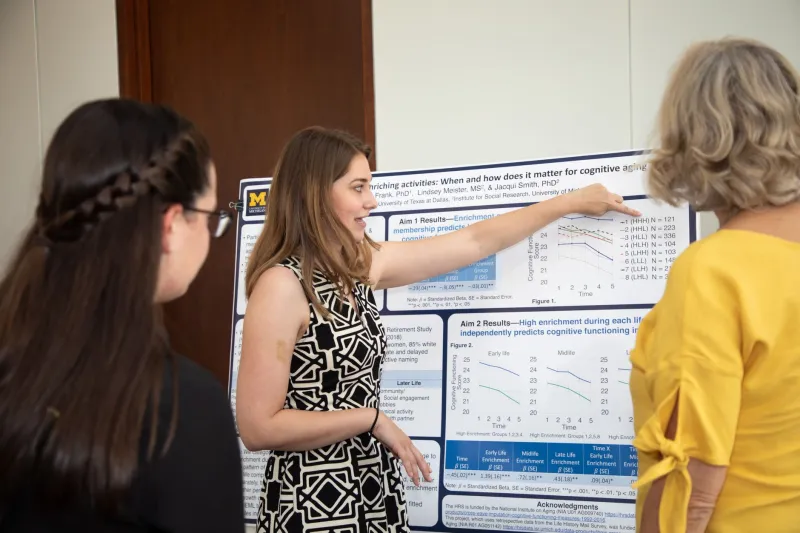
Poster sessions remain the single most forgiving venue for solo networking. The presenter is obligated to stand in one place and talk to whoever arrives — a structural advantage no other conference setting offers. Arrive early in the session window, before crowds form and before presenters' energy flags.
Manufacturing a Community Where None Exists
Solo does not have to mean isolated. Most large American meetings now run structured channels for exactly this situation: first-timer meetups, affinity-group mixers, early-career receptions, and society-level mentoring sessions. These events are frequently under-attended relative to their value, which means the people who do show up tend to be unusually open to conversation.
Digital channels extend the same logic. Meeting-specific hashtags, society Slack workspaces, and session back-channels let solo attendees coordinate informal dinners and coffee meetups. Posting something as simple as "first time at this meeting, anyone else grabbing dinner near the convention center Thursday?" routinely produces a table of strangers who become professional contacts.
Converting a Week Into a Relationship
The solo attendee's real disadvantage is not the meeting itself but the week after it, when lab-backed peers return to advisors who heard about their encounters and can push collaborations forward. Without that scaffolding, follow-up discipline matters more.
Within 48 hours of leaving the meeting, send every new contact a short, specific note referencing the actual conversation. Within two weeks, deliver on anything promised — a PDF, a dataset, an introduction. And log everything: names, institutions, research interests, and context notes. A network built from scratch is a database before it is a community.
Attending alone strips away the borrowed credibility of a lab. What replaces it — intentionality, preparation, and follow-through — turns out to be a durable professional asset in its own right. The researchers who learn to work a meeting solo rarely need anyone to vouch for them again.