The 72-Hour Window: Converting a Poster Session Into a Year of Co-Authored Science
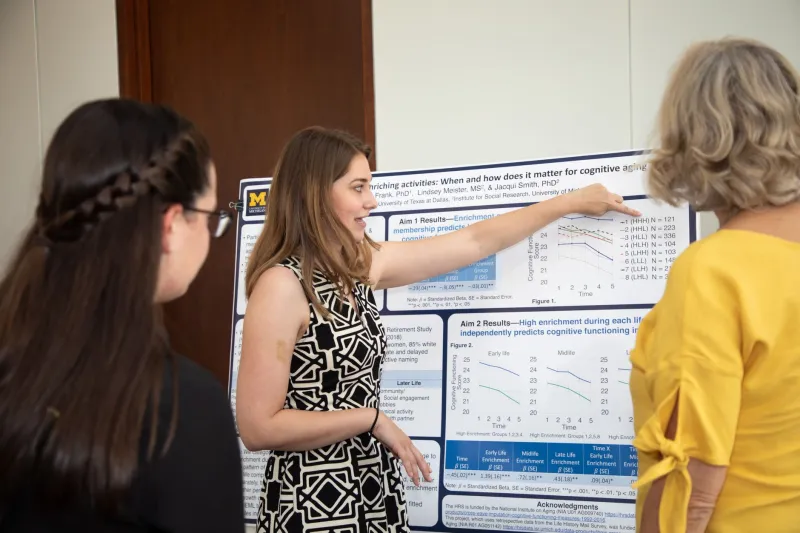
The poster comes down at 4:30 p.m. By Friday of the following week, most presenters have done nothing with the conversations they had. That gap — between a promising hallway exchange and a durable professional relationship — is where a surprising amount of scientific opportunity quietly disappears.
The researchers who consistently convert conference appearances into co-authored work do not rely on charisma or luck. They run a disciplined follow-up protocol, and most of it happens within seventy-two hours of leaving the exhibit hall.
The Three People Who Actually Matter
A four-hour poster session can generate twenty conversations. Almost none of them will matter equally. Experienced presenters sort their contacts into three tiers before they ever leave the venue.
The first is the domain peer — someone at a similar career stage working on an adjacent problem. These are the likeliest future co-authors, and the most commonly neglected. Presenters chase big names and forget that the postdoc two posters down is the person who will actually run the experiment.
The second is the senior gatekeeper: a PI or program officer who controls access to samples, datasets, funding, or a future position. You are not going to co-author with them next month. You are trying to be memorable when a relevant opportunity crosses their desk.
The third is the connector — the person who introduced you to others, ran the session, or seemed to know everyone. A single well-maintained relationship with a connector can outperform a dozen cold emails.
If you captured nothing else at the meeting, capture names and one contextual detail for at least one person in each tier. A note as thin as "Maya, UMich — mentioned her cryo-EM bottleneck on the membrane protein" is enough to restart the relationship months later.
Timing: Why 48 Hours Beats Two Weeks
The instinct after a conference — especially one in a city like San Diego or New Orleans, where the social calendar is punishing — is to recover first and follow up later. The data of lived experience argues otherwise. A follow-up that lands within two business days arrives while you are still a face, not just a name. One that lands ten days later competes with a full inbox and a foggy memory.
A workable schedule looks like this:
- Within 24 hours: Connect on LinkedIn or find the institutional email. No message yet, or a one-line acknowledgment at most.
- Hours 24–48: Send the substantive email to tier-one contacts. Reference something specific they said. Attach nothing unless they asked.
- Hours 48–72: Follow up with tier-two and tier-three contacts, plus anyone who requested your poster PDF or a reference.
The specificity rule is non-negotiable. "Great meeting you at SfN" is deletable. "You mentioned your lab's struggle with the chronic recording stability issue — this preprint from the Buzsáki group might be relevant" is not.
What the First Email Should Ask For
The most common mistake is asking for too much, too soon. A first email that requests a collaboration, a dataset, or a position asks the recipient to do work on behalf of a stranger. The emails that work ask for something nearly costless: an opinion, a PDF, a fifteen-minute call.
A template that has worked repeatedly for early-career presenters:
Subject: Following up — [specific topic] at [conference]
Dear Dr. [Name],
I enjoyed your question about [specific detail] during my poster session on Tuesday. Since then I've been thinking about your point regarding [their idea].
One thing I didn't mention: our group has [relevant resource — pilot data, a protocol, an unpublished result] that may be useful to you. Happy to share.
If it's easier to talk, I'm flexible for a short call next week.
Best regards, [Name]
Notice the structure: specific recall, a small offer, a low-friction ask. No attachments unless requested, no timeline pressure, no ask for collaboration.
From Correspondence to Co-Authorship
Converting an email exchange into shared work usually follows one of three well-worn paths.
The shared-methods path. You both use a technique and agree to exchange protocols or validate results. This often matures into a small methods paper or a shared figure within six to nine months.
The resource path. One lab has data, samples, or instrumentation the other needs. A material transfer agreement or data-sharing arrangement creates formal contact, and co-authorship follows naturally when results emerge.
The grant path. You discover complementary expertise and agree to co-apply for a small internal grant or a foundation award. Even an unfunded application builds the working relationship.
What all three share is a concrete, near-term deliverable. "Let's collaborate sometime" dies. "I'll send you the pilot data by the 15th and you can tell me if it's worth pursuing" survives.
A Realistic Calendar
Collaborations born at meetings follow a fairly consistent rhythm. Expect two to four weeks of friendly correspondence, then a defined exchange — data, protocols, a draft. The first co-authored abstract submission typically comes six to twelve months after the initial conversation, often for the following year's edition of the same meeting.
That last point deserves emphasis: the most reliable measure of whether a conference contact is real is whether you plan to attend the same meeting again. Serial attendance at the same annual conference — the same handful of US meetings, year after year — is how thin hallway acquaintances harden into the co-author networks that shape entire careers.
The poster session is not the presentation. It is the application. The follow-up is where the science happens.