The 8 A.M. Sunday Problem: Inside the Dead Zones of American Conference Scheduling
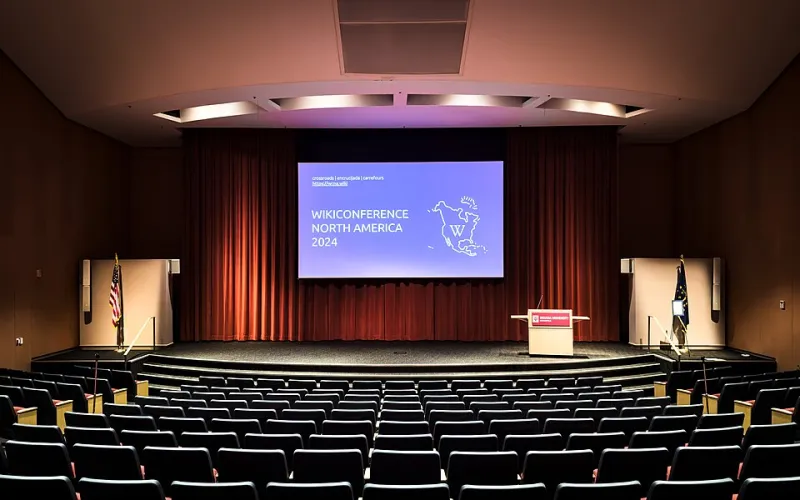
Photo: Jdforrester, CC BY 4.0, via Wikimedia Commons
The talk was good. The presenter was prepared. The slides were clean, the data was solid, and the findings deserved an audience. Instead, at 8:15 on a Sunday morning in a ballroom built for two hundred, Dr. Elena Marsh looked up from her second slide and counted six people — three of whom were the session chair, the AV volunteer, and a graduate student who appeared to have wandered in for the free pastries.
Ask enough conference veterans and you will hear a version of this story from nearly everyone. Empty sessions are not an anomaly at American science meetings; they are a structural feature of how large programs get built. Understanding why they happen is the first step toward making sure your talk is never the one nobody sees.
The Anatomy of a Dead Slot
Program chairs describe a familiar set of traps. The Sunday 8 a.m. slot exists because four-day meetings run out of prime real estate, and someone has to present before the airport exodus begins. The room across the hall from the keynote suffers from simple gravitational physics: nobody risks missing a plenary to hear an unknown speaker twenty feet away. And the concurrent session with four overlapping talks on the same topic is usually the residue of a review process that grouped abstracts thematically without checking the master schedule.
"You're building a jigsaw puzzle with 900 pieces and a hard deadline," one program chair at a mid-sized disciplinary society told us. "Conflicts are inevitable. What varies is how much effort goes into softening them."
The larger the meeting, the worse the arithmetic. A conference running ten concurrent tracks for three days offers each attendee perhaps a third of the program they would ideally see. Presenters, in other words, are not just competing with the Sunday morning slot — they are competing with every other talk happening at the same moment.
What It Feels Like to Speak to the Chairs
Presenters describe the near-empty room with a specific kind of dread. "You spend months on the work, pay registration out of your own grant, fly across the country, and then perform your science to a row of empty chairs," one postdoc said. "It's hard not to take it personally, even though you know it isn't."
The professional consequences are murkier than the emotional ones. A sparsely attended talk rarely generates the corridor buzz, the follow-up emails, or the recruiting interest that a well-attended one does. For early-career researchers building a network from scratch, that difference matters.
Schedule-Proofing Your Talk
Speakers have more leverage than they think. Consider these tactics:
- Request your slot early. Many societies let presenters flag scheduling constraints during abstract submission. A conflict-of-interest form that lists collaborators' talks and religious observances is not fussiness; it is self-defense.
- Read the draft program the day it posts. If your talk lands in a notorious dead zone, a polite email to the program chair sometimes gets results — especially if you can propose a concrete swap.
- Bring your own audience. A lab group, a collaborator's cohort, even two or three colleagues who agree to show up changes the room's energy. Audiences attract audiences.
- Signal beyond the program. A post on the conference hashtag, an email to your subfield listserv, or a note in the app's discussion feed can pull in attendees who never read the printed schedule.
- Rethink the format. If your society offers poster sessions or lightning talks, those formats often concentrate foot traffic more reliably than a Sunday ballroom.
What Chairs Could Do Better
The burden should not fall entirely on presenters. Program committees that publish attendance-pattern data from prior years, stagger themed sessions across time slots, and avoid stacking the same subfield in parallel rooms produce measurably fairer programs. Some societies now run conflict-detection software on their schedules; others simply require a second set of eyes on the final grid. The technology is mundane. The payoff — no more six-person audiences for good science — is not.
The next time your abstract is accepted, do not just celebrate the acceptance. Ask when you are speaking. The answer may matter as much as the yes.